Mouth & oesophagus
Chewing reduces the size of food and mixes it with saliva. Swallowing then moves it through the oesophagus by coordinated muscle contractions.
Gut Health Guide
Gut health is about much more than simply having a happy stomach. It involves the digestive system, the community of microorganisms living in the gut, the food we eat and the everyday habits that influence how our body functions.
Explore the guide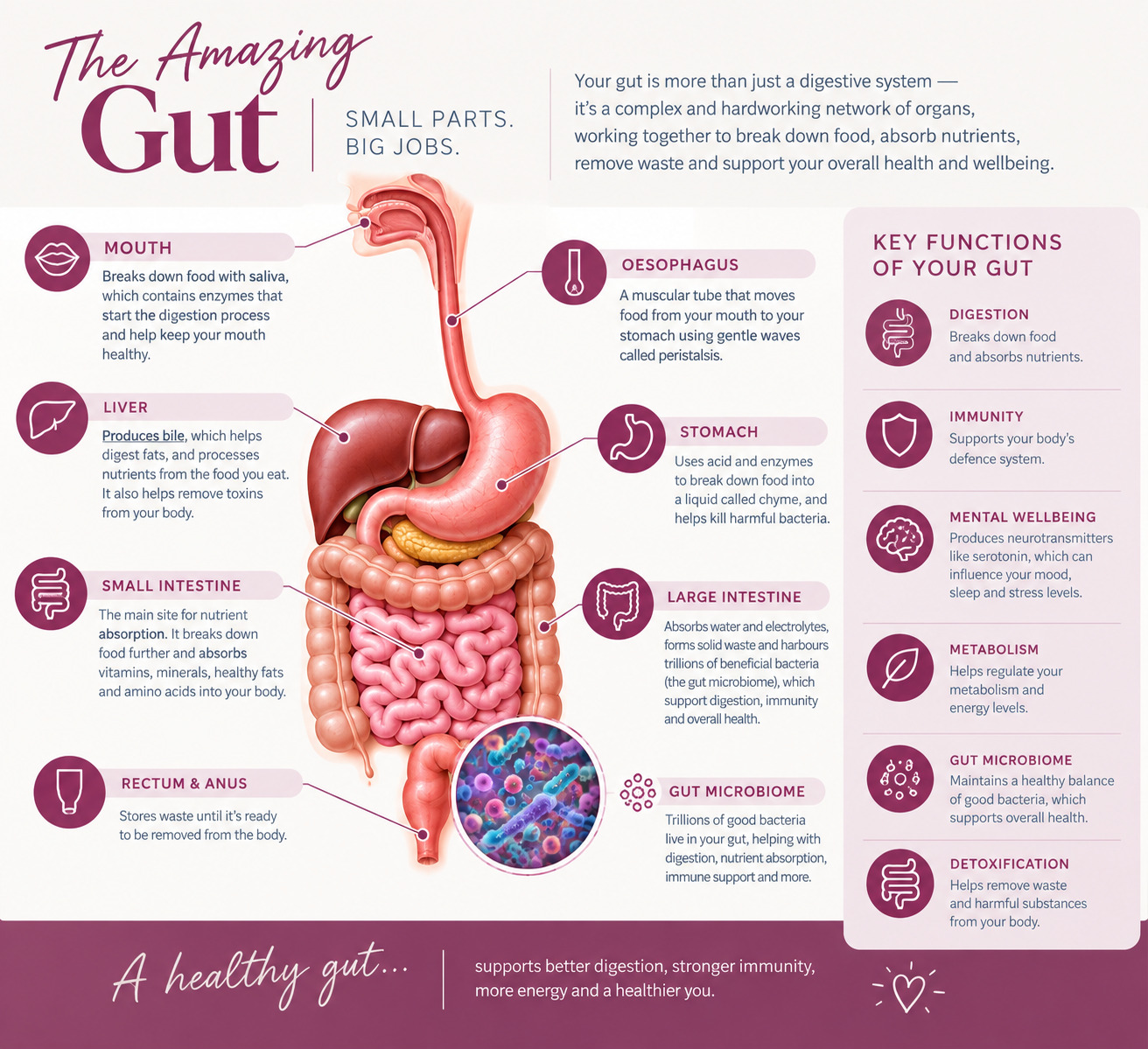
The term gut health is used broadly to describe the wellbeing and function of the gastrointestinal system and the relationship between the gut and the microorganisms that live there. There is no single test that tells you whether your gut is "healthy" in every sense. Instead, gut health is better understood as part of your overall wellbeing and lifestyle.
It includes how food is digested and absorbed, how waste moves through the bowel, the condition of the gut lining, and how the gut interacts with the nervous and immune systems. Occasional changes in bowel habits are common, but persistent symptoms, blood in the stool, unexplained weight loss or a sudden change in bowel habits deserve proper medical advice rather than a self-prescribed cleanse.
Your microbiome is the collection of microorganisms—such as bacteria, fungi and viruses—and their genetic material that live in a particular environment. The gut microbiome is not a single "good bacteria" strain; it is a changing community whose composition differs between people. Diet, medicines, age and other exposures can influence it, and a change in the microbiome is not automatically a sign of disease.
Microorganisms in the large intestine help process parts of plant food that human enzymes cannot fully digest. They can produce compounds from fermentation and interact with the gut lining and immune system. These effects are being actively studied, so it is more accurate to talk about associations and possible mechanisms than to claim that one microbe or supplement will produce a guaranteed health result.
The journey through digestion
Gut health is not only about bacteria. The digestive system includes the gastrointestinal tract plus organs such as the liver, pancreas and gallbladder. Muscles move food by peristalsis, digestive juices break nutrients down, and the intestinal wall absorbs what the body can use. The remaining material becomes waste.
Chewing reduces the size of food and mixes it with saliva. Swallowing then moves it through the oesophagus by coordinated muscle contractions.
Muscle contractions mix food with stomach acid and digestive enzymes. The stomach releases the resulting mixture gradually rather than all at once.
Digestive juices from the pancreas and bile from the liver help break down carbohydrates, proteins and fats. Nutrients then pass through the intestinal wall into the body.
The colon absorbs water, stores and moves waste, and provides a home for microbes that ferment some undigested fibre. The result is passed as a bowel movement.
The food connection
Dietary fibre is a broad group of carbohydrates that the body does not completely digest. Some fibre adds bulk and helps stool move through the bowel; other fibre dissolves or forms a gel, and some is fermented by gut microorganisms in the large intestine. Fibre-rich foods also bring vitamins, minerals and other plant compounds, but different fibres can have different effects and individual responses vary.
Fresh, frozen and low-sugar canned options can all contribute fibre, water and plant compounds. Different colours and types provide variety.
Beans, lentils, chickpeas, oats, brown rice and wholegrain breads provide different fibres. Add them gradually if your current intake is low.
Nuts and seeds contribute fibre, unsaturated fats and other nutrients. Portions still matter because they are energy-dense foods.

Everyday habits
A bigger picture
The gut responds to more than one meal or one supplement. Diet, medicines, illness, sleep, movement and other aspects of daily life can all affect digestive symptoms and the gut microbiome. The effect is personal, which is why a useful approach starts with patterns and context rather than chasing a single explanation or trying to "rebalance" the gut based on a commercial test.
A varied pattern supplies different fibre types and plant compounds. The goal is not perfection at every meal, but a pattern that is nourishing and realistic over time.
Antibiotics and other medicines can affect bowel habits or the microbial community. Do not stop prescribed treatment without speaking with your clinician.
The gut and nervous system communicate in both directions. Stress may intensify symptoms for some people, although it does not mean symptoms are imaginary.
Walking and other regular activity support general health and may help bowel movement through the digestive tract. Start at a level that suits your ability.
Gut health and body weight are connected through a complex mix of diet, metabolism, lifestyle and microbiome interactions. Fibre-rich foods may help with fullness and support a nutritious eating pattern, but changing the microbiome does not automatically cause weight loss. Weight management is influenced by many factors, including food intake, activity, sleep, medicines, health conditions and environment. Treat gut health as one part of that broader framework rather than a shortcut or a substitute for appropriate medical care.
Read Gut Health & Weight ManagementYour digestive system already has organs that digest food and remove waste. A short cleanse has not been shown to replace the benefits of a varied eating pattern, adequate fluids and regular movement.
Different foods provide different fibres and nutrients, and people respond differently. A varied pattern is more realistic than expecting yoghurt, kimchi or another single food to fix every symptom.
More fibre is not automatically better if it is added too quickly or aggravates a diagnosed condition. Increase it gradually, drink enough fluids and seek tailored advice when symptoms persist.
Gut health describes several connected things: digestion and nutrient absorption, bowel function, the gut lining, and the relationship between the gastrointestinal tract, its microorganisms, the nervous system and immune system. It is not one single measurement or diagnosis.
The gut microbiome is the community of bacteria, fungi, viruses and other microorganisms, together with their genetic material, living in the digestive tract. The community varies between people and can change with factors such as diet, medicines and illness. It helps process some components of food, but no single microbe defines good gut health.
Many dietary fibres reach the large intestine, where some are fermented by gut microorganisms. Other fibres help add bulk or hold water in stool. Variety from vegetables, fruit, legumes, whole grains, nuts and seeds is generally more useful than focusing on one specific fibre, and increases are best made gradually.
Gut health and body weight are connected through complex interactions involving diet, metabolism, the microbiome and lifestyle. Fibre-rich foods may support fullness and overall diet quality, but supporting the gut is not a guaranteed or standalone weight-loss solution.
A varied pattern can include vegetables and fruit, legumes such as lentils and chickpeas, oats and other whole grains, nuts and seeds. These foods provide different types of fibre and plant compounds. Add fibre gradually, drink enough fluids and choose foods you tolerate well rather than following a rigid list.
There is no need to rely on a quick 'detox' to look after your gut. A consistent pattern of varied, nutritious food, appropriate fibre intake, movement and hydration is more practical. Persistent pain, bleeding, unexplained weight loss or ongoing changes in bowel habits need professional assessment.
Health information: This page is for general education and does not diagnose or treat medical conditions. If you have persistent or concerning digestive symptoms, speak with an appropriately qualified healthcare professional.